This post contains affiliate links. Learn more.
The first time someone told me my gut might be affecting my skin, I laughed out loud. It sounded like the exact kind of thing you read on a wellness blog written by someone trying to sell you expensive powders. Yet here I am, years later, writing a wellness blog about it. Life has a funny way of turning you into the person you used to roll your eyes at.
My introduction to gut health happened through a friend who was deep into paleo eating long before anyone else cared. He talked about digestion constantly, not in an awkward over-sharing way, but simply as though it were obviously central to how a person feels. At the time, I had a whole catalog of low-grade complaints I had just stopped noticing: afternoon slumps, stubborn bloating after certain meals, and skin that broke out on a schedule I couldn’t predict. He listened to me complain about all of it and asked, “Have you ever thought about your gut?” I certainly had not.
So what is “gut health,” really?
The phrase gets tossed around so much that it has lost its punch, so let me put it the way I wish someone had explained it to me back then. Your digestive tract is home to trillions of bacteria and other microbes, which we call the gut microbiome. Some of them help break down food your body can’t digest on its own, especially fibre. In the process, they crank out compounds that, research suggests, interact with everything from your immune system to your metabolism and, possibly, your mood.
“Gut health,” in plain language, mostly boils down to two things: a digestive system that works comfortably, and a diverse, well-fed community of microbes living inside it. That’s really it. It isn’t some mystical state you unlock by buying a single product. It’s more like tending a garden. What you feed it, how consistently you look after it, and how much you disrupt it all matter.
The science here is still young, and I think it’s important to acknowledge that. Researchers are learning new things constantly, and a lot of the bold claims you see online run way ahead of the actual evidence. What does seem fairly well supported is that dietary diversity, fibre, and fermented foods are associated with a more varied microbiome. That was enough for me to start experimenting.
What I tried first (and where I went wrong)
Naturally, I went completely overboard. I bought the most expensive probiotic I could find, cut out a long list of foods overnight, and started chugging kombucha like it was tap water. Within two weeks, I felt measurably worse. I was even more bloated, not less, and genuinely miserable about the whole experiment.
Looking back, I made the classic beginner mistake of changing everything at once. I had no idea which change was actually helping and which was making me miserable, and I was so restrictive that eating stopped being fun. The kombucha, in the quantities I was downing it, was also not doing my stomach any favors.
So I started over, much more slowly. I dropped the dramatic elimination plan and stopped treating the probiotic like a magic pill. Instead, I focused on adding things to my plate rather than taking them away. That simple shift in mindset turned out to be the most useful takeaway from the entire process.
What actually seemed to work for me
The biggest change was simply eating a wider variety of plants. Not just eating a giant salad every day, but incorporating different things across a normal week: lentils one day, a handful of walnuts another, a strange vegetable I’d normally walk right past at the store, oats, fresh herbs, berries. I had read that the number of different plant foods you eat might matter just as much as the sheer quantity, and I found that idea far more motivating than staring at a list of forbidden foods. It turned eating into a bit of a fun game.
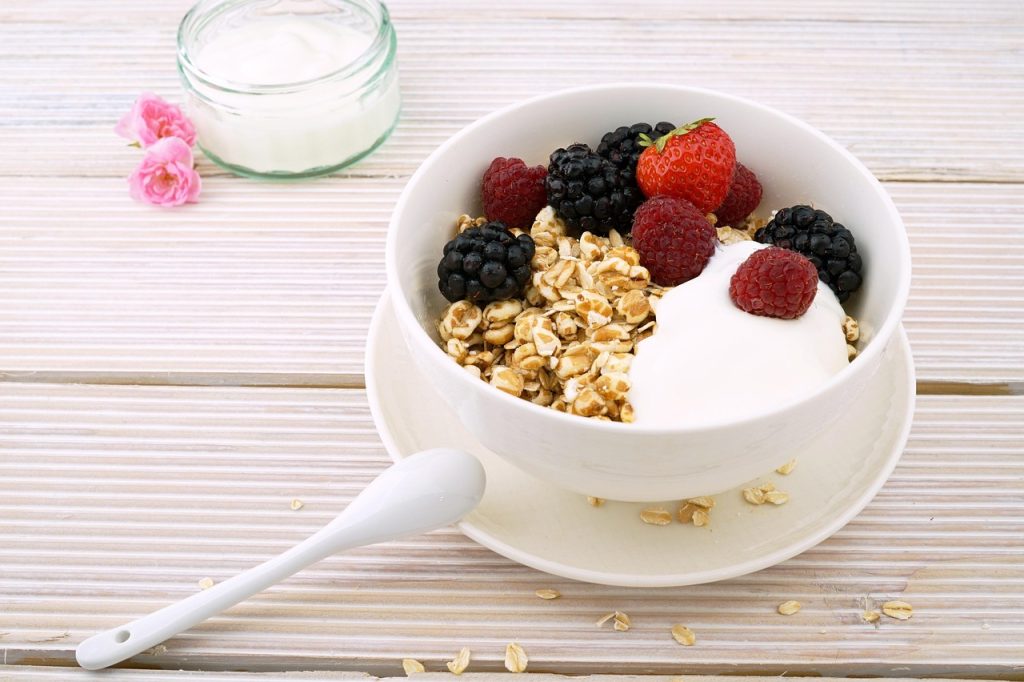
Fermented foods were the second piece of the puzzle. I eat plain yogurt most mornings, keep a jar of sauerkraut tucked in the fridge, and toss a little kimchi into rice bowls. Small amounts, eaten regularly, beat a massive dose only when I happen to remember. I’ve also come to genuinely like kefir, though that definitely took a few tries.
The third piece was a lot less glamorous: I just slowed down. I started actually chewing my food, sitting down to eat, and refusing to inhale lunch while staring at my computer screen. I can’t point to a clinical study proving this changed my microbiome, but I noticed my digestion felt remarkably calmer when I wasn’t rushing through meals.
What I noticed
I want to be careful here, because everyone’s body is completely different and I’m just describing my own experience, not making guarantees. With that said, a few things definitely shifted for me over a couple of months.
Digestion was the first and most obvious win. The after-lunch bloating that I had long accepted as just part of being alive became much less frequent. My energy followed suit. The three o’clock slump didn’t completely vanish, but it softened around the edges, and I suspect that has as much to do with eating steadier meals as anything microbial.
My skin was the change I least expected and still find hardest to explain. It didn’t transform overnight, but the unpredictable breakouts became noticeably less frequent over time. There is research exploring a gut - skin connection, though it’s early days, and I’ve made other tweaks to my skincare routine as well, so I hold this observation pretty loosely.
If you’re brand new to this
If you’re standing at the edge of the rabbit hole the way I once was, my honest advice is to resist the sudden urge to buy everything in sight. Start by adding one fermented food you actually enjoy eating, whether that’s yogurt, kefir, sauerkraut, or miso, and have a small amount most days. See how it sits with you before adding anything else.
At the same time, try nudging up the variety of plants on your plate rather than just loading up on volume. A simple way to do this is to swap one thing each week: try a different grain, a new bean, or a herb you’ve never cooked with before. Increase your fibre gradually, too; I learned the hard way that going from almost no fibre to a huge amount overnight is profoundly uncomfortable.
And give it time. A few weeks of consistent, gentle changes will tell you far more than one dramatic week of overhauls ever will. If something makes you feel worse, consider that useful information rather than personal failure.
Start with food first, and check with your doctor before adding anything new.
One brand that comes up often in gut health conversations is Ancient Nutrition, which makes probiotic blends and bone broth protein powders alongside its collagen line. It’s one more option to compare if a supplement makes sense for you.
One last thing: if you have ongoing digestive symptoms, please talk to a doctor before you start experimenting. Persistent bloating, pain, or strange changes in digestion deserve a proper look, and a good practitioner can help you rule things out before you go down any wellness rabbit holes of your own.
Gut health ended up being less about finding a single magic fix and much more about learning how to pay attention. Which, now that I think about it, is pretty much what this whole wellness journey has been for me all along.