This post contains affiliate links. If you buy through them, I may earn a small commission at no extra cost to you. I only point to products that meet the criteria I describe below.
Baths have a bit of an image problem. Showers are efficient, while baths feel like something meant for children or movie characters with way too much free time. A friend who worked in spas was the first person to point out that this is the wrong way to look at it, and that an Epsom salt bath done correctly is less of an indulgence and more of a simple, low-effort recovery ritual.
She had a solid point. But there is also plenty of nonsense written about Epsom salts online, so it helps to look at what a good bath actually involves, what the research supports or doesn’t support, and where the placebo effect is probably doing most of the work.
How to run a proper Epsom salt bath
Start with the water. You want it warm, not scalding hot. A lot of people run their baths as hot as they can possibly stand, only to climb out feeling light-headed and totally dried out. Something around body temperature or just a little above, roughly 37 to 39 degrees Celsius, is plenty. A simple rule of thumb is that if you would hesitate to hold your wrist under the running tap, it is simply too hot.
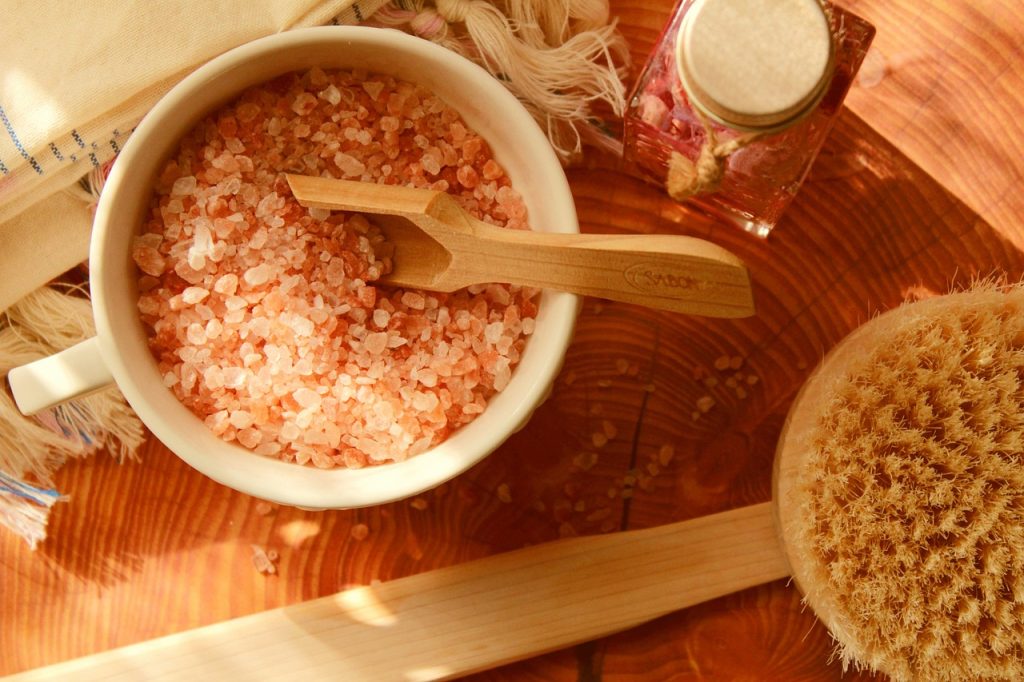
The standard guidance is to use about two cups of Epsom salts in a regular bathtub, adding them while the tap is running so they dissolve properly. Plain, unscented magnesium sulphate is all you really need. Scented versions usually cost more and often contain fragrance blends that can irritate sensitive skin, making a large bag of fragrance-free Epsom salt the much more practical buy. You can always choose your own scent later.
If you want to use essential oils, there is one rule worth knowing: never drop them straight into the water. Oil and water do not mix, meaning the concentrated oil just floats on the surface and sticks straight to your skin, which can cause irritation. Instead, mix a few drops into a tablespoon of carrier oil first, like sweet almond or jojoba, and then add that mixture to the bath. A small bottle of jojoba oil goes a long way for this exact purpose. Lavender is a classic choice for the evening, and some people enjoy a bit of eucalyptus during the winter months. If your skin runs dry, tossing in a handful of colloidal oats is a gentle addition too.
Staying in for around fifteen to twenty minutes is the sweet spot for most people. Go much longer than that and you are likely to feel waterlogged and drained rather than relaxed. Keep a glass of water nearby since warm baths can leave you thirsty, dim the lights, and leave your phone in another room. The doing-nothing part matters much more than it might sound.
What to do afterwards
Rinse off briefly, pat yourself dry with a towel, and moisturise straight away while your skin is still slightly damp, which helps lock in hydration. A simple body oil or a rich, fragrance-free lotion works wonderfully here. Drink some more water, slip into something comfortable, and if you can manage it, head to bed within the hour. That is when the ritual truly earns its place in your week.
If you want to extend the wind-down, some people pair bath nights with a Sensate device, which uses gentle sound vibration as a relaxation tool. Code AFFSEN10OFF gets 10% off sitewide.
What the evidence says, and what’s probably placebo
This is the part most articles tend to skip over entirely. Epsom salt is magnesium sulphate, and you will frequently read that soaking in it boosts your magnesium levels. The actual research on this is limited and mixed. A few small studies suggest some magnesium might be absorbed through the skin, but nothing robust enough to treat a bath as a replacement for dietary magnesium or for a conversation with your doctor.
What is much better supported is the warm water itself. Warmth helps muscles feel looser, and research suggests a warm bath in the hour or two before bed may help some people fall asleep more easily, possibly because of the way core body temperature drops afterwards. Add dim lighting, zero screens, and twenty quiet minutes, and you have got a remarkably effective wind-down routine regardless of what is dissolved in the water.
So if a bath leaves your shoulders feeling noticeably better, it may well be the warmth and the stillness rather than the salts. That is completely fine. Something does not need a complicated scientific mechanism behind it to be worth doing.
Where I would push back is the word detox. Epsom salt baths are often described as drawing toxins out of your body. There simply is not good evidence for that claim, and I would not buy any product on that basis. Your liver and kidneys already handle that job very well on their own.
Where it fits in a self-care routine
An Epsom salt bath is best thought of as physical recovery rather than medical treatment. It is something to reach for after a long day at a desk, a stretch of poor sleep, or a week that has felt mentally heavy. It works alongside the basics rather than replacing them: moving during the day, eating reasonably well, getting outside for fresh air, and going to bed at a sensible hour.
None of those individual habits are particularly exciting on their own. Put together, though, they add up. The bath just happens to be the most pleasant part of the lot.
If you want to try it out, keep things simple to start: warm water, two cups of plain Epsom salts, twenty minutes of quiet, and your phone left in another room. You can always add oils later if you like. And if you have a medical condition, are pregnant, or have concerns about your skin, heart, or circulation, check with a healthcare provider first.
My spa friend was right in the end. Not because the salts are magic, but because a proper bath gives you official permission to stop moving for twenty minutes. Some weeks, that is the most useful thing you can possibly do for yourself.